We Handed the Latest AI Models to Real Professionals in 'Safe' Careers — Some of Them Got Very Nervous
A little over a year ago, the conventional wisdom was pretty clear: AI could write your emails, maybe generate some marketing copy, but it wasn't coming for the electrician, the therapist, the tattoo artist, or the jazz musician. Those jobs were human jobs. Tactile, emotional, unpredictable. Safe.
Well, the models got better. A lot better. So we decided to actually check.
We recruited 11 working professionals across trades, creative fields, and niche specialties — people doing these jobs every day for a living — and we put them in the same room (sometimes literally, sometimes virtually) with the latest versions of GPT-4o, Claude 3.5 Sonnet, and Gemini 1.5 Pro. The goal wasn't to humiliate anyone. It was to honestly measure where AI has genuinely closed the gap and where human skill remains stubbornly, beautifully irreplaceable.
Some of what we found was reassuring. Some of it was a little wild.
The Trades: Still a Physical World Out There
Let's start with the good news for anyone who's ever unclogged a drain for a living.
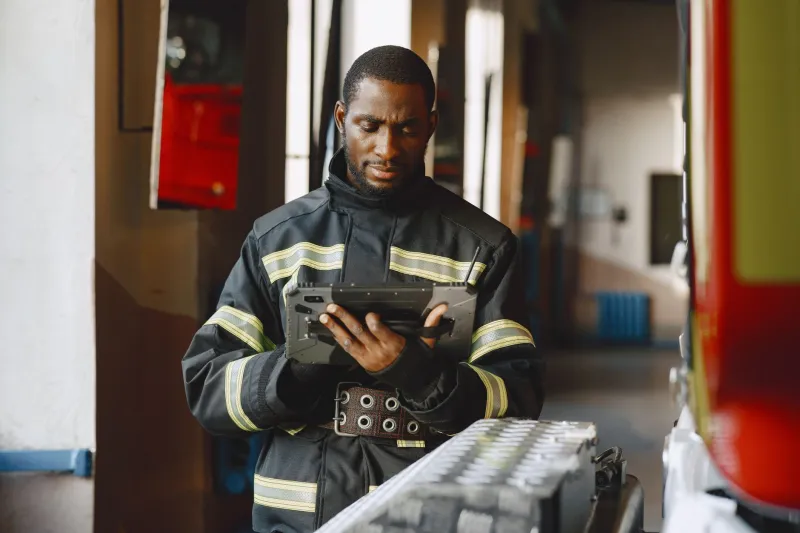
We worked with Marcus, a licensed plumber in Atlanta with 14 years of experience, and handed him a tablet loaded with AI assistants to use on an actual job site — a tricky residential re-pipe with some surprises behind the drywall. The AI was genuinely useful for pulling up building code references, calculating pipe sizing, and even suggesting a workaround for an unexpected junction. Marcus called it "a really good apprentice who's read every manual."
But when the actual cutting, fitting, and soldering started? The AI watched. It couldn't tell him that a specific fitting felt slightly off before it became a problem. It couldn't adapt in real time to the weird angle created by a beam that wasn't in the original plans. The physical intuition built over thousands of jobs — that's not in any training dataset.
Same story with Denise, an HVAC technician in Phoenix. AI helped her document service calls faster and troubleshoot unfamiliar error codes on newer systems. Her verdict: "It's like having Google, but smarter. It doesn't replace what I do, it just speeds up the annoying parts."
Verdict on trades: AI is a legitimate productivity tool here, but the hands-on, adaptive, physical dimension of the work remains fully human. Nobody panic.
Therapy and Counseling: The Empathy Question Gets Complicated
This one made us genuinely uncomfortable to test — in a productive way.
We partnered with two licensed therapists (both asked to remain anonymous for obvious professional reasons) who agreed to use AI tools for the administrative and preparation side of their practice: session notes, treatment plan drafts, psychoeducation materials for clients, and insurance documentation. The productivity gains were real and kind of staggering. One therapist estimated she was saving nearly five hours a week on paperwork alone.
But here's where it got interesting: we also had both therapists review AI-generated responses to simulated client disclosures — the kind of emotionally charged, ambiguous, high-stakes moments that define good therapy. The AI responses were often technically correct. Empathetic-sounding. Structurally sound.
And both therapists immediately identified what was missing: the micro-calibration that happens in a real session. The pause before responding. The decision to not ask a follow-up question because the client's body language said they needed silence. The accumulated context of 30 previous sessions informing a single sentence.
"It's not wrong," one therapist told us. "It's just flat. And flat in therapy can actually cause harm."
Verdict on therapy: AI as an admin assistant? Transformative. AI as a therapist? Not even close, and the gap is specifically human.
Creative Trades: The Tattoo Artist and the AI That Tried to Keep Up
Ray runs a custom tattoo studio in Austin and agreed to let us throw AI image generators at his workflow. We used Midjourney, Adobe Firefly, and DALL-E 3 to generate concept sketches based on client briefs — the kind of consultations Ray does dozens of times a month.
The AI-generated concepts were often visually impressive. Clients in our informal test group actually liked several of them as starting points. But Ray pointed out something we hadn't considered: custom tattoo design isn't just about aesthetics. It's about understanding what a client actually means versus what they say, knowing how a design will age on a specific skin tone, understanding how placement affects the final look, and navigating the emotional significance of what someone is choosing to put on their body permanently.
"Someone came in last month wanting a tattoo for their mom who just passed," Ray said. "You think I'm going to hand them an AI prompt form?"
He does use AI now — for reference gathering, for exploring style variations quickly, for generating backgrounds he can hand-draw over. His productivity on the design prep side has genuinely improved. But the art, and more importantly the relationship that makes the art meaningful? That's Ray.
Verdict on creative trades: AI is a capable collaborator and a time-saver on the front end. It hasn't replaced the human judgment, emotional intelligence, or craft mastery that defines real creative work.
The Niche Professions: Where Things Got Genuinely Surprising
Here's where we have to be honest: a couple of the professions we tested showed more AI encroachment than we expected.
Paralegal work, specifically document review and legal research, has moved faster than most people realize. The AI tools available today can process case documents, flag relevant precedents, and draft motion outlines at a level that genuinely compresses junior paralegal work. The two paralegals we spoke with weren't in denial about it — they were already adapting, leaning into client communication and courtroom support roles where AI is still weak.
Medical coding — the highly specialized work of translating clinical records into billing codes — is another area where AI performance has improved sharply. Not perfectly, but enough that several of the coders we spoke with are watching the space with understandable anxiety.
Verdict on niche professions: Some specialized knowledge-based roles are seeing genuine, meaningful pressure. The smart move is lateral adaptation, not denial.
What Actually Survived
After all of it — the job sites, the therapy offices, the tattoo studios, the legal departments — here's what we kept seeing that AI consistently couldn't replicate:
- Physical presence and tactile judgment. You can't train your way to knowing something feels wrong.
- Relational trust built over time. Clients, patients, and customers don't just want the right answer — they want it from someone they've chosen to trust.
- Contextual improvisation. Real work is weird and unpredictable. The best professionals adapt on the fly in ways that still exceed AI's situational reasoning.
- Emotional stakes. When the stakes are personal — a tattoo, a therapy session, a tough conversation — humans want humans.
What AI has genuinely taken over: the administrative weight, the reference lookup, the first draft, the documentation. And honestly? Most of the professionals we spoke with were glad to hand that stuff off.
The job isn't gone. It's just got a new coworker. Whether that coworker eventually wants a bigger desk is the question nobody can fully answer yet — but for now, the humans are still running the meeting.